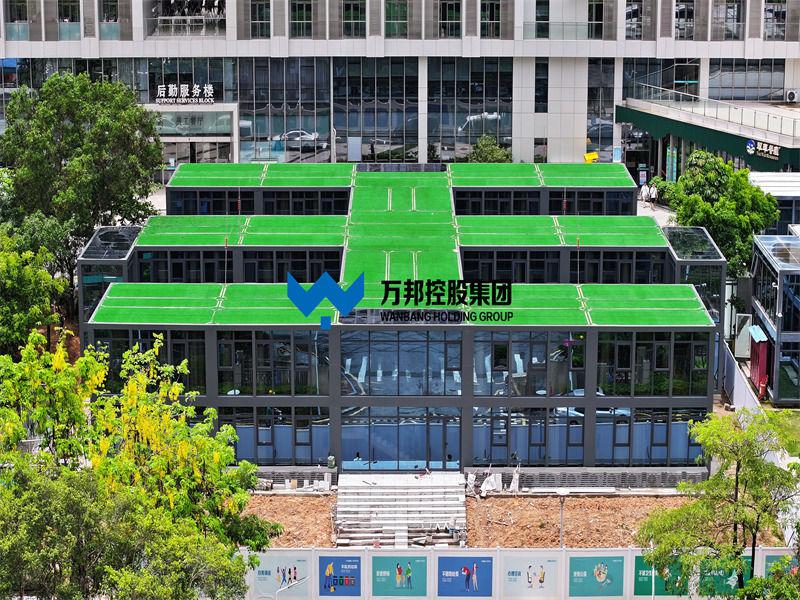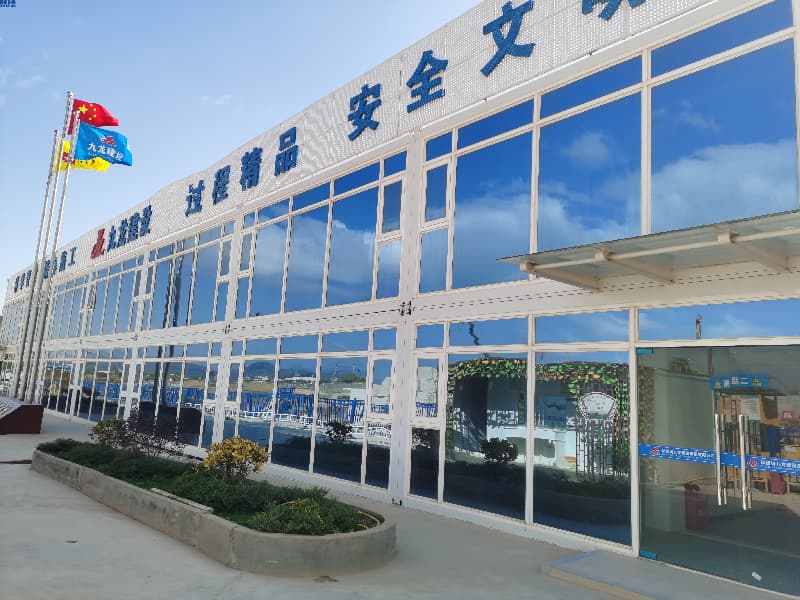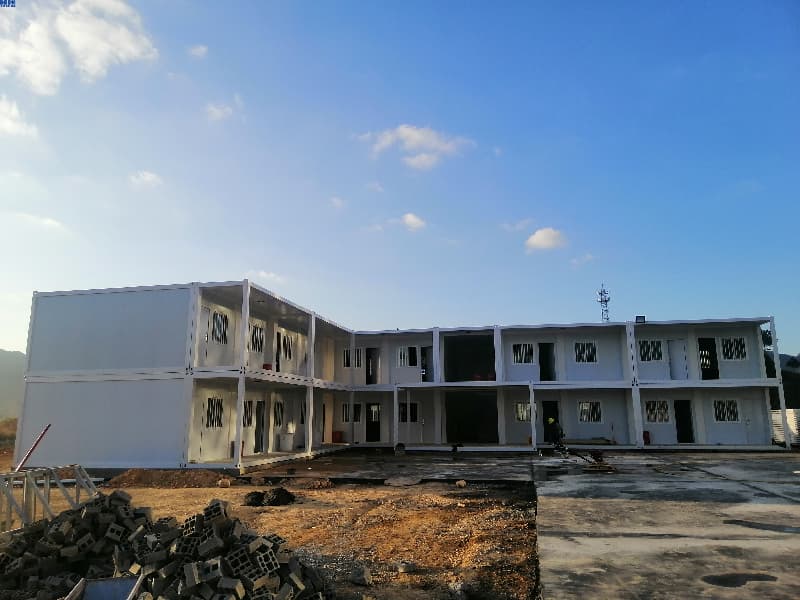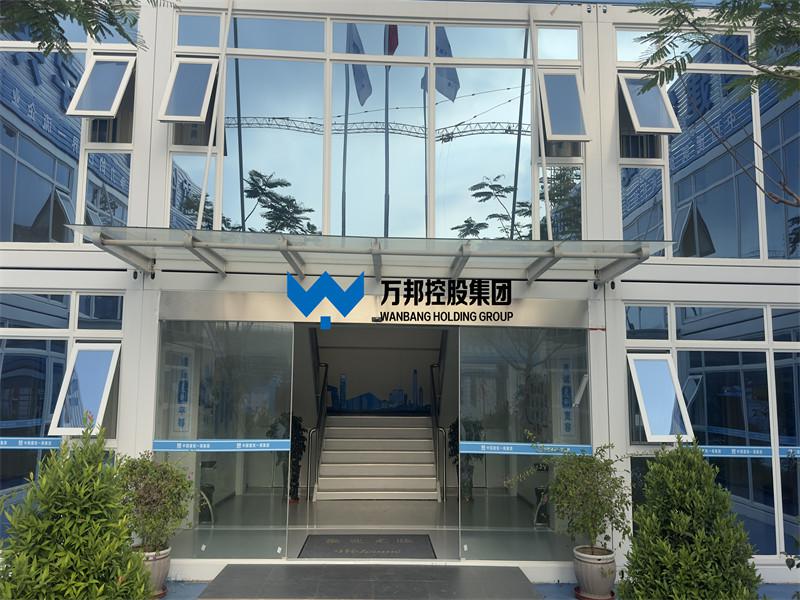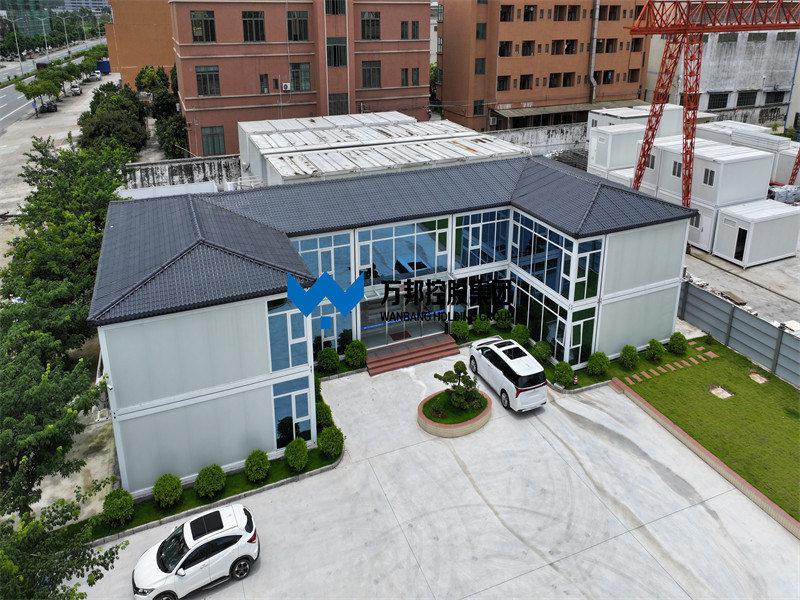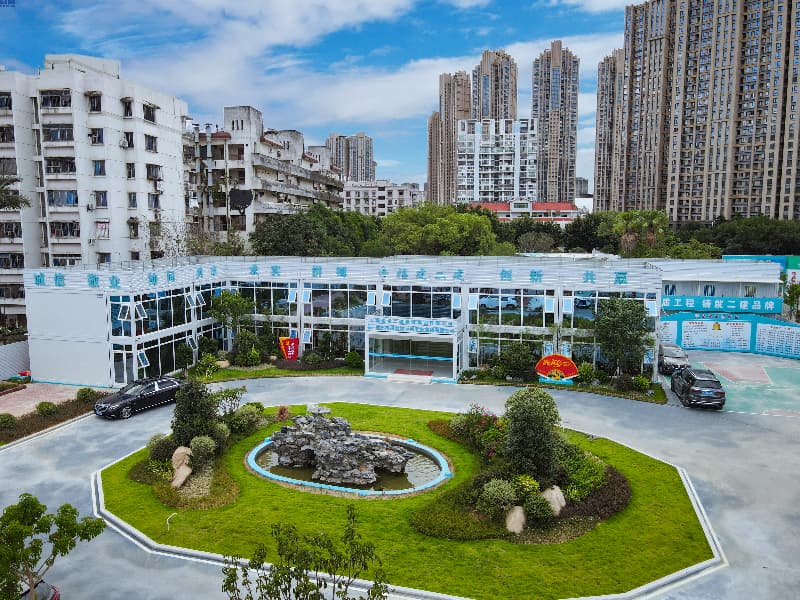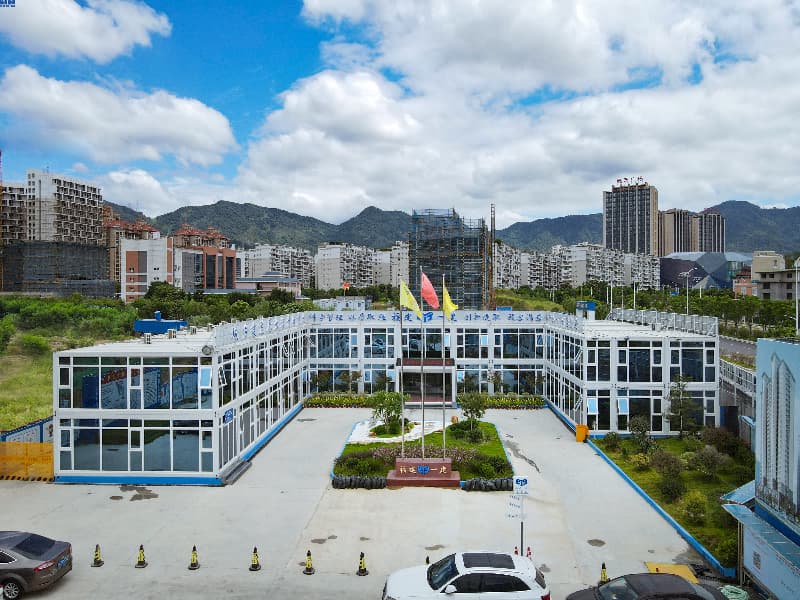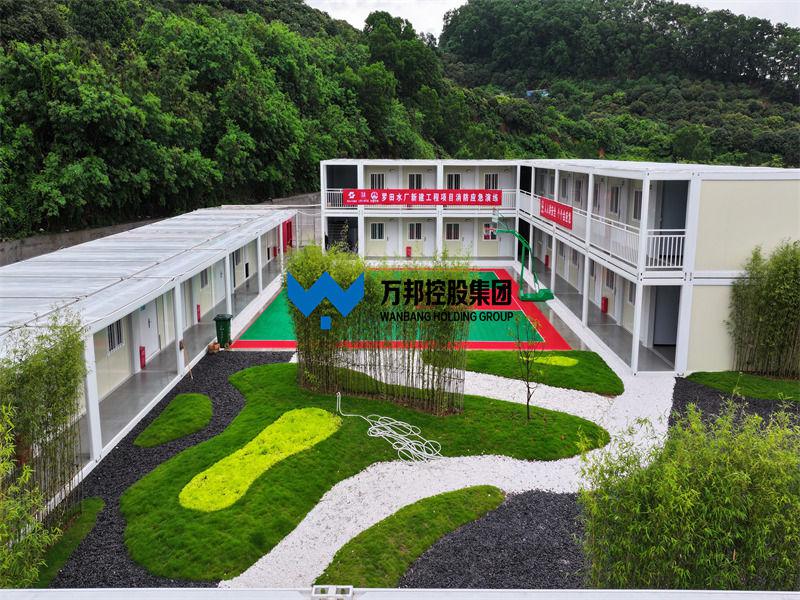
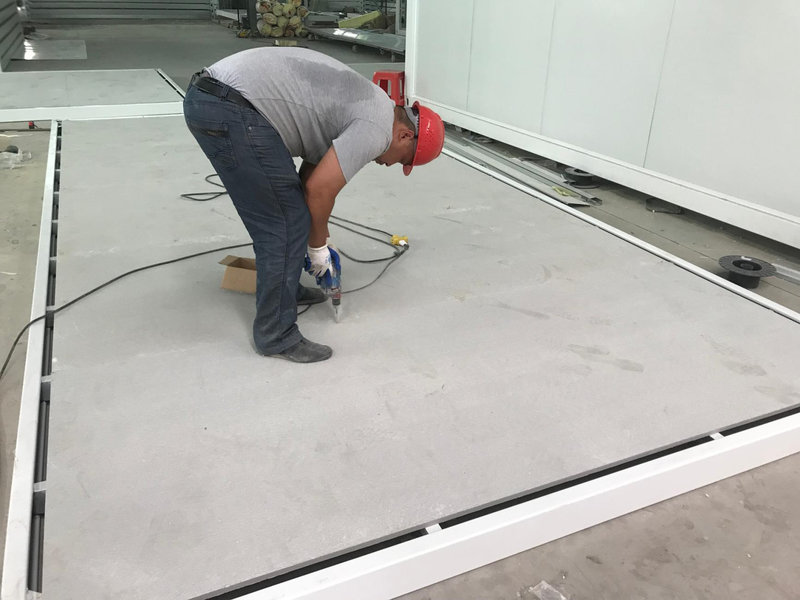
The fire performance of a container workforce camp is decided long before the units reach site — in the panel core, the floor build-up and the electrical installation. Wanbang flat-pack container houses are built with colour-steel rock wool sandwich panels carrying a Class A (non-combustible) fire rating, a cement fibre floor, concealed wiring and industrial-grade switches, with a service life of 10–15 years. For a camp accommodating hundreds of people, those are the details that determine whether a fire stays contained or spreads between units.
Short answer: Specify the panel core first — rock wool sandwich panels rated Class A (non-combustible) are the base of camp fire safety. Then confirm the floor build-up, the way wiring is run, and the grade of electrical fittings. For a standard Wanbang flat-pack container house, the published specification is Class A fire resistance with a rock wool core, a cement fibre floor, concealed wiring, industrial-grade switches, and a 10–15 year service life.
A container housing unit is a steel frame wrapped in insulated sandwich panels. Fire performance is set by three elements, in order of importance:
The structural frame is steel, so it does not contribute fuel. That is why, in practice, the conversation about fire safety in a container camp almost always comes down to what is inside the walls and under the floor.
In a camp, units sit close together in rows, often with shared walkways, and they are occupied around the clock. If a wall panel core can burn, a fire in one unit has a path into its neighbours.
Wanbang flat-pack and quick-assembly container houses use colour-steel rock wool sandwich panels, described by their material performance as fire-resistant, moisture-resistant and thermally insulating, with a Class A fire resistance rating — non-combustible. Rock wool is the panel core; the steel skins on either side are non-combustible as well. Panels are produced in 50 mm and 75 mm wall thicknesses, so the same unit can be specified for a temperate site or a site with a wider temperature swing.
| Element | Published specification |
|---|---|
| Fire resistance rating | Class A (non-combustible) |
| Fire-resistant material | Rock wool core |
| Wall panel | Colour-steel rock wool sandwich panel, 50 mm / 75 mm |
| Panel performance | Thermal insulation, fire resistance, moisture resistance |
| Floor | Cement fibre board with PVC flooring — load-bearing, fire-resistant, slip-resistant |
| Electrical fittings | Industrial-grade switches; concealed wiring |
| Interior finishes | PVC flooring, colour steel panel trims, suspended ceiling, premium doors |
| Standard unit size (L×W×H) | 6,055 × 2,990 × 2,896 mm |
| Service life | 10–15 years |
Steel components carry a baked enamel finish that is resistant to fading for up to five years, and the drainage system is a centralized, organized internal arrangement that keeps roof water away from the building envelope — a detail that matters as much for keeping moisture out of panels as for drainage itself.
Container camps are not single-purpose buildings. A full camp typically combines accommodation with working and catering functions — the Wanbang unit range covers meeting rooms, reception rooms, offices, dormitories, staff kitchens, staff canteens and restrooms.
Cooking equipment and stored fuel load. The unit that most often needs to be separated from sleeping blocks or given a dedicated block.
Where the camp's incoming power and equipment sit. Industrial-grade switches and concealed wiring are the specification answers here.
Highest occupancy and occupied at night. The zone where a non-combustible panel core and a clear escape route matter most.
The practical implication is layout planning, not just product specification: group the higher-risk functions, keep sleeping blocks clear of them, and keep escape routes open. That planning is normally settled with the camp designer once the unit mix is known.
The last point is worth stating plainly: fire requirements vary by country and by project, and they are normally confirmed with the local authority or the project engineer. What a supplier controls is the specification of the unit — panel core, floor, wiring and fittings — and that is where the questions above should be answered in writing at quotation stage.
Yes, with the environment taken into account. Camp projects delivered by Wanbang include a 360-unit camp for a steel plant in Lagos, Nigeria, specified for heat and humidity; more than 500 units for a nickel mining camp at Zamboanga in the Philippines, with anti-corrosion and anti-rust treatment and no concrete foundation required; and a 5,050 m² living compound for the VAN project in Iraq, engineered for high-temperature, sand-laden conditions. In each case the panel specification stays the same and the finishing and protection details change with the site. For the climate side of the same decision, see our notes on specifying container camps by region.
It depends on the panel core. Wanbang flat-pack and quick-assembly container houses use colour-steel rock wool sandwich panels with a Class A fire resistance rating — non-combustible. Always confirm the core material rather than assuming all sandwich panels behave the same way.
It describes the fire performance of the panel material: the core does not support combustion. In a camp where units stand in rows and are occupied at night, that is the property that limits how far a fire can travel through the walls.
Yes — staff kitchens, canteens and restrooms are part of the standard unit range alongside offices, dormitories and meeting rooms. Because cooking areas carry a higher risk, they are normally grouped and separated from sleeping blocks in the camp layout.
The published service life of the Wanbang flat-pack container house is 10–15 years. Units are also designed for reuse and relocation, which is why they are widely used on projects that move from site to site.
Related reading


 IPv6 RÉSEAU PRIS EN CHARGE
Hi! Click one of our members below to chat on
 Français
 English
 Deutsch
 Русский
 Italiano
 Español
 Português
 Türk
Türk Ελληνικά
 Indonesia
 عربي
عربي