
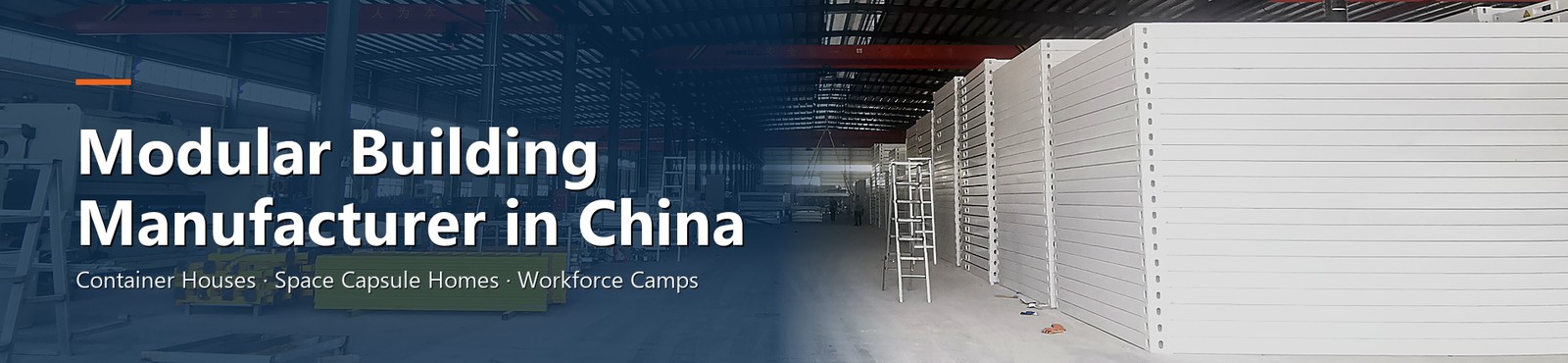
Modular Camp Solutions - Mining, Workforce and Emergency Housing
This page is for buyers planning accommodation and facilities at remote sites: mining companies, construction and infrastructure contractors, oil and gas field operators, and agencies sourcing emergency or relief housing. It covers the four sectors we serve with modular camp buildings, the module mix that fits each camp function, how camps scale and relocate, and what to confirm before requesting a quotation. Full technical specifications live on the product pages linked in each section, so this page can serve as the single starting point for your camp program.
Mine sites demand buildings that survive repeated moves and high-altitude conditions. Each module in our mining camp range is a steel-frame unit built for repeated transport and site relocation, designed for copper, lithium and gold mine sites in regions such as the Andes and the Atacama, where cold and low-pressure conditions apply. Camps are scaled from a few dozen beds to several hundred beds by combining dormitory blocks with site offices, ablution units, kitchens, dining halls and clinic modules. Full specifications are on the prefabricated mining camp accommodation product page, and a delivered example is documented in the Indonesia mining project case article.
Construction, road and energy programs need camps that arrive fast, expand with headcount and leave the site cleanly at demobilization. Workforce housing delivered by Wanbang Modular has reached sites in 50+ countries, including a 150-unit camp for a power transmission project in the Atacama region of Chile - one of five overseas camp programs documented on our site. Camps are arranged as dormitory rows, a welfare block (kitchen, dining, recreation), a hygiene block (ablution, laundry) and an administration zone, all on one module grid.
Field programs run on shift rotations, so offices and staff living space must sit inside the same camp perimeter. Our oilfield camp modules pair site offices with nearby staff accommodation on a standard 6055 x 2400 x 2896 mm flat-pack footprint, built on a galvanized steel frame with bolted connections, so the camp expands or partly relocates as the program moves between well sites. Modules are general-purpose steel-frame buildings; hazardous-area zoning and destination-specific certifications are project-specific matters to be confirmed against your project specifications and local regulations before ordering. Specifications: oilfield camp office and staff accommodation modules.
In emergency response the constraint is transport and installation speed, not production. Flat-pack and foldable shelters ship knock-down to maximize units per container, install on simple foundations with a small crew, and - because they are steel-frame buildings designed for repeated transport - convert into clinics, offices or worker accommodation for the reconstruction phase instead of being demolished. Shelter options: disaster relief housing - flat pack shelters and emergency shelter big container house.
| Camp Function | Module Type | Planning Note |
|---|---|---|
| Worker dormitories | Flat-pack container units, single-room or multi-room | Knock-down shipping keeps freight cost per bed down on large programs. |
| Supervisor and staff rooms | Expandable or foldable units | Fold-out floor area gives larger rooms without a larger shipping footprint. |
| Site office and meeting | Flat-pack office modules with meeting and welfare rooms | Same footprint system as dormitories, so the camp stays on one grid. |
| Ablution and laundry | Purpose-configured container modules | Factory-installed plumbing reduces on-site wet works to utility connections. |
| Kitchen and dining | Flat-pack modules configured for catering | Seat count and service windows are set against the roster pattern. |
| Clinic / first-aid | Single flat-pack module or combined pair | Keeps medical facilities inside the same relocation system as the camp. |
The table describes typical module assignments for camp programs, not universal specifications. The final mix depends on headcount, shift pattern, site regulations and the specification confirmed in your quotation.
A modular camp does not have to be sized correctly on day one. Capacity grows by adding dormitory rows and welfare modules on the same foundation grid - from a few dozen beds in the early-works phase to several hundred beds at peak construction. Capacity also moves: when a contract ends, the same units are craned out, transported and redeployed on the next project, which is why contractors running a pipeline of sites treat the camp as equipment rather than a sunk cost.
Because modules arrive factory-finished, the site itself needs a leveled area, a simple foundation and a crane or forklift - not a full construction crew. Two specification points matter most for relocation-heavy programs. First, lifting: modules are handled by crane between trucks, foundations and stacking, and lift points are engineered into the frame - confirm the lift-point design and crane capacity against the model drawings for your configuration. Second, structure: galvanized steel frames and sandwich panel walls are selected against the wind, snow and seismic requirements of the destination site. Both points are confirmed per model and per project rather than assumed to be universal.
Four inputs shape a camp quotation: headcount and rotation pattern (decides dormitory and catering count), the split between office and accommodation modules, destination logistics (port, inland haul distance and site access decide the transport share of the budget), and site ground conditions (set the foundation and utility scope). Production periods are model-specific - standard flat-pack units are listed at around 10-15 days on product pages, while quantity, customization, ocean freight, customs and site installation all extend the total - so there is no universal delivery time; confirm the schedule for your configuration against your quotation. Quotations are comparable only on the same basis: identical specification, delivery scope, freight terms and installation responsibility - the checklist in what should be included in a prefab house quotation covers the items most often left out.
How quickly can a camp be deployed?
Production periods are model-specific: standard flat-pack units are listed at around 10-15 days on product pages, while larger expandable models, order quantity and customization move that figure. Ocean freight, customs and site installation are additional. Confirm a model-specific schedule against your quotation rather than relying on a general number.
Can the camp expand after the first phase is installed?
Yes. Modules share one footprint grid, so additional dormitory rows and welfare blocks are added without reworking the existing camp. Plan the first-phase layout with expansion space in mind - the sales team can propose a phased master plan against your schedule.
Do the modules meet hazardous-area requirements for oil and gas sites?
Modules are general-purpose steel-frame buildings. If a module will sit inside a classified hazardous area, the zoning and equipment requirements come from your project specifications and local regulations and must be confirmed before ordering. We configure the module to the agreed specification but do not issue hazardous-area certifications.
Can emergency shelters be reused after the relief phase?
Yes. The units are steel-frame buildings designed for repeated transport and relocation, so relief settlements commonly convert shelters into clinics, offices or worker accommodation for the reconstruction phase instead of demolishing them.
Related reading:


 IPv6 RÉSEAU PRIS EN CHARGE
Hi! Click one of our members below to chat on
 Français
 English
 Deutsch
 Русский
 Italiano
 Español
 Português
 Türk
Türk Ελληνικά
 Indonesia
 عربي
عربي


