Construction site cabins are the prefabricated units that house everything a project team needs on site: the site office, worker living quarters, welfare facilities and secure storage. If you are pricing them for an overseas project, one decision comes before every specification: whether to hire cabins from a local fleet or buy them from a manufacturer. This guide sets out that decision, shows how the units combine into a full site setup, and lists what to confirm before ordering from an overseas factory.
In most markets the term covers four functional groups. A small site may need only one; a remote project usually combines all four:
If you have seen the terms temporary site accommodation, construction site living quarters or temporary site dormitory used interchangeably, note that these terms overlap but do not always describe the same requirement: temporary site accommodation can cover offices, welfare facilities and sleeping units together, while living quarters and dormitory terms point more specifically at worker accommodation. Confirm the intended use and local requirements before comparing products, then use the right unit mix rather than a generic package.
Most search results for site cabins come from rental companies, because in the UK and parts of Europe hiring is the dominant model: the hire fleet is local, the contract is short, and the rental company handles transport and removal. Hiring works well under four conditions:
Buying becomes more attractive when cabins can be reused across multiple projects, but there is no deployment count that guarantees a saving: the break-even point depends on rental rates in your market, purchase cost, transport, installation, maintenance, storage between projects and resale value. Compare the total cost over the expected period of use rather than relying on the number of deployments alone - and run the same complete-cost exercise on both options, because a hire contract that looks expensive per month may still be cheaper for a single short project. Availability is a separate question from cost: for projects outside hire-fleet coverage - remote regions, overseas sites, or markets without a compliant local rental fleet - buying is often the only available route, whatever the math says.
For international buyers, a third factor matters as much as the buy-versus-hire math: destination compliance. A hire cabin is certified for its home market. A purchased cabin can be engineered and documented for the destination market before it ships - but only if you confirm those requirements with the manufacturer before production, not after arrival. Specific requirements depend on the project location, intended use, local regulations and contract conditions; for fire, structural, sanitation and electrical standards, confirm with local professionals and the manufacturer before requesting final quotations. The import sequence behind this is covered in our walkthrough of how to import container houses from China, from inquiry to on-site installation.
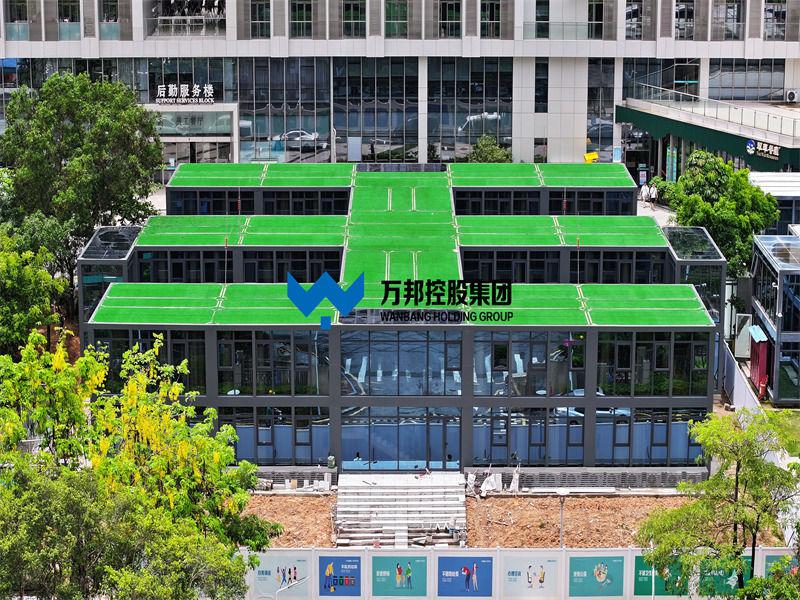
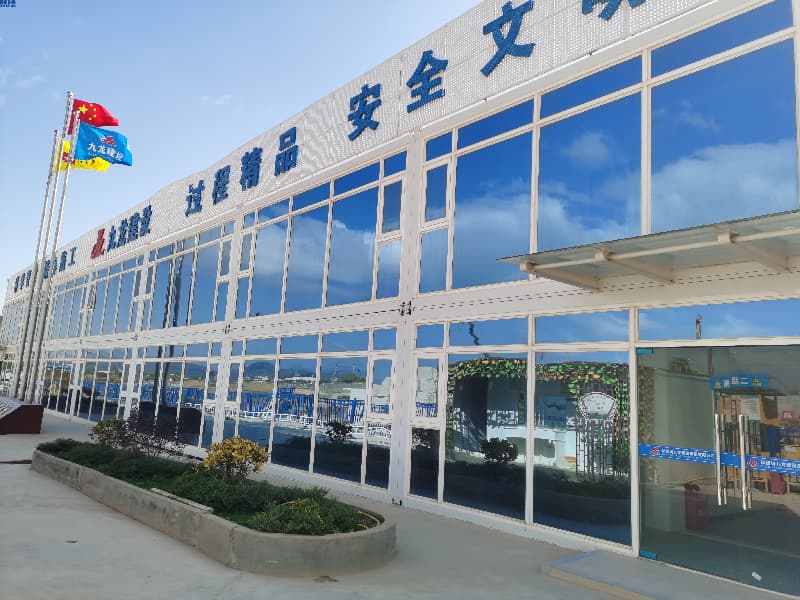
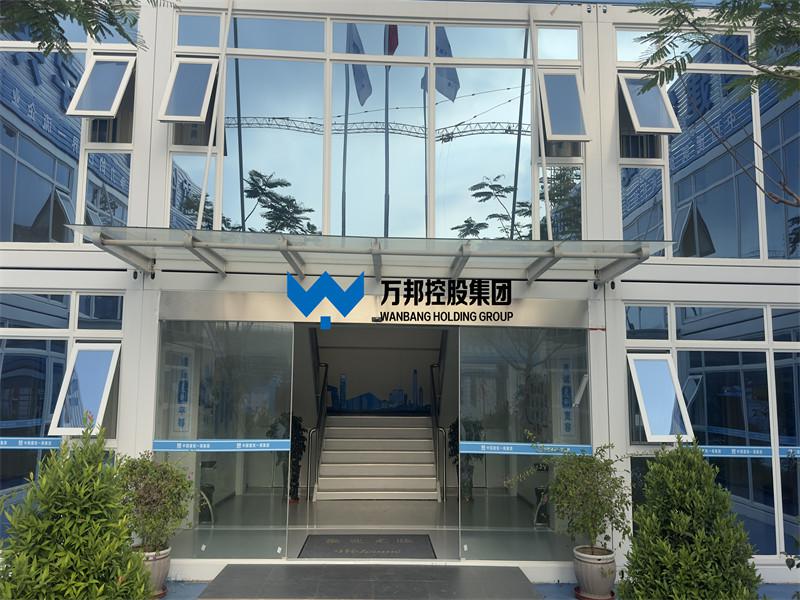
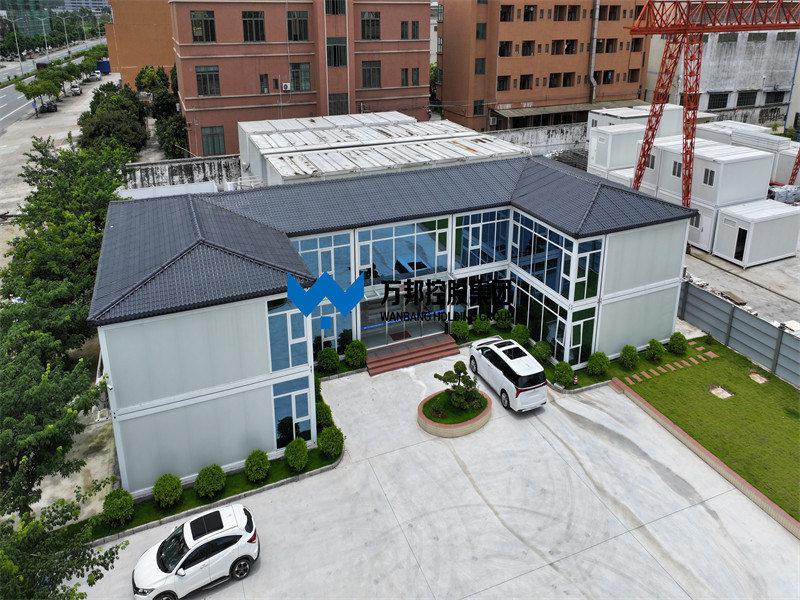
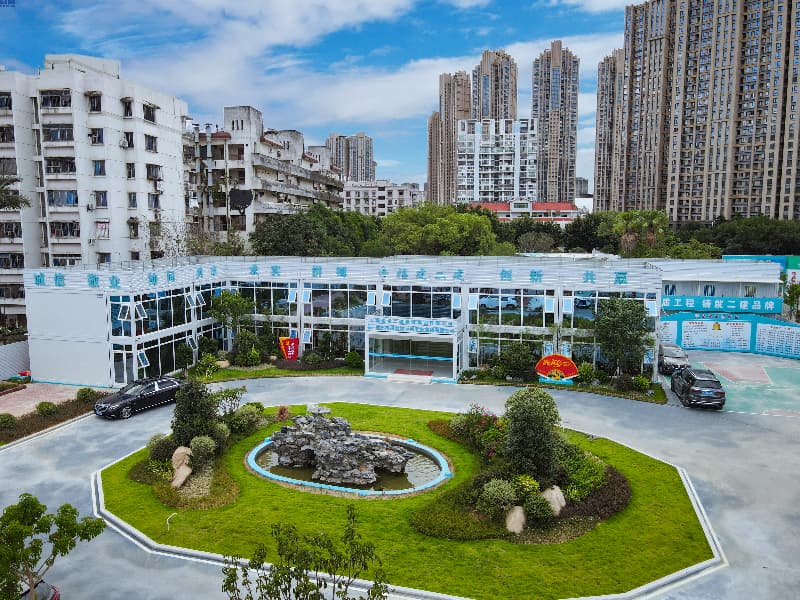
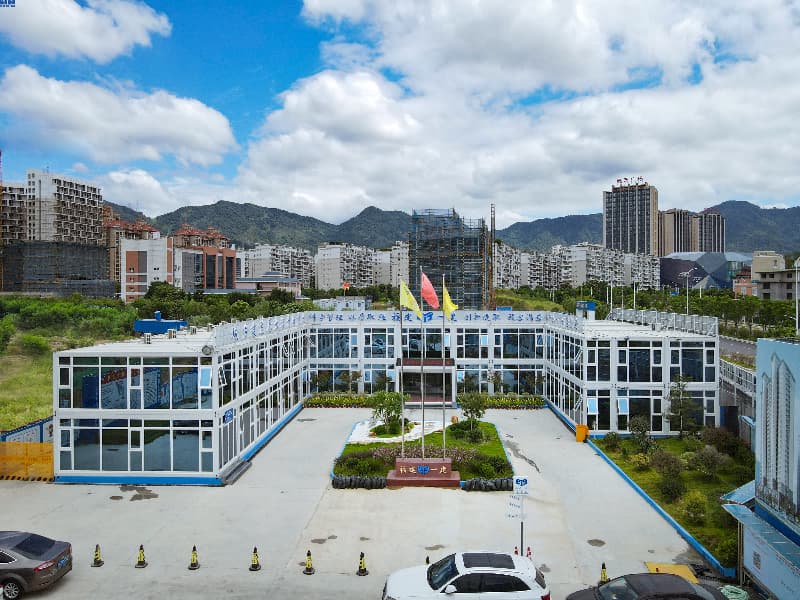
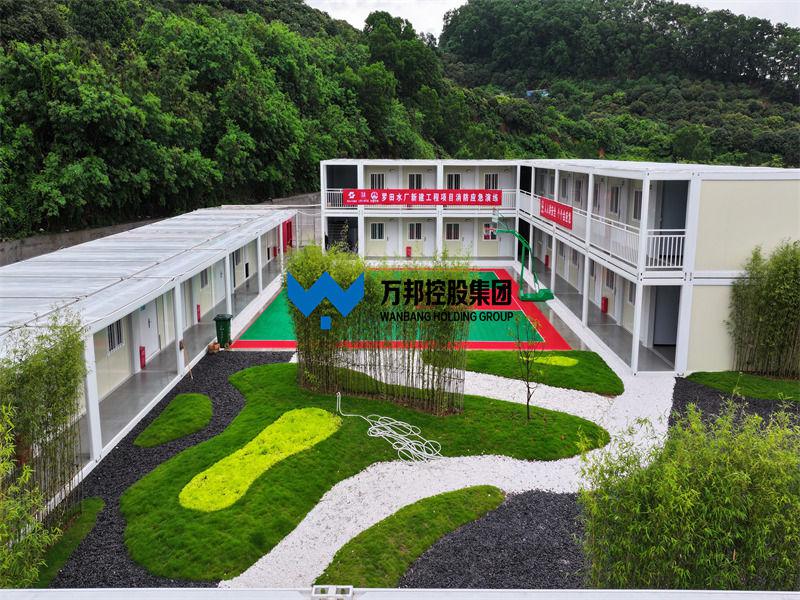
A construction compound is rarely one cabin. The common pattern is functional zoning:
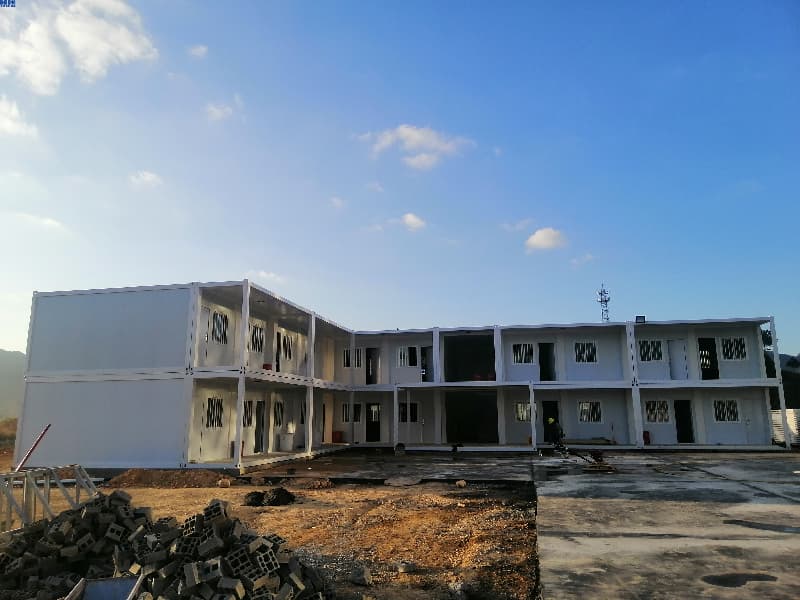
Stacking is what makes compact sites workable. Modules in the Wanbang camp range share a standard footprint of 6,055 mm x 2,990 mm, and stacking compatible modules can increase floor area without increasing the building footprint - subject to structural design, access, stairs, foundations and applicable fire and building regulations. Stacking is therefore an engineering decision to confirm per project, not a plug-together feature of every module. The full footprint arithmetic - and the fire-planning implications of two-story layouts - are set out in our guide to two-story modular dormitories for workforce camps.
How many cabins a given crew needs has no single answer: it depends on headcount, shift pattern, whether workers commute or reside on site, and which welfare facilities local regulation mandates. That sizing exercise belongs in the camp-planning stage, before unit quantities are fixed - changing the unit mix after production starts is far more expensive than fixing it on paper first.
Cabin models differ, but within the Wanbang camp range the dormitory modules share one materials platform with the rest of that range. The figures below are the published platform specifications for these camp-range modules - they describe this product family only, not every cabin type the company builds, and any configured unit is governed by its own specification sheet:
| Specification | Value |
|---|---|
| Standard module footprint | 6,055 x 2,990 x 2,896 mm |
| Wall system | Colour-steel rock wool sandwich panel |
| Floor system | Cement fibre board with PVC surface |
| Stated service life | 10-15 years |
| Assembly | Bolted connections, no site welding |
| Drainage | Centralized internal system |
These are platform-level numbers published on the dormitory range page; they are a comparison baseline, not a substitute for the formal specification sheet of the model you order, and the internal usable area of any unit differs from its external dimensions. Performance figures such as wind and seismic ratings are project-specific and should be confirmed against your site conditions during the quotation stage. For cabin types outside the camp range - flat-pack units that load efficiently into a 40ft container, or expandable units that open to roughly three times their transport footprint - see the flat-pack container house range and the expandable container house range.
The screening logic for choosing a Chinese manufacturer is covered in a separate checklist on 8 checks to run before ordering. Once a manufacturer is shortlisted, close these six points before paying any deposit:
When you price both routes, line the cost factors up side by side. The table below is a structuring checklist for your two quotations - hire terms vary by market and contract, so treat it as a checklist, not pricing data:
| Cost factor | Buying | Hiring |
|---|---|---|
| Initial payment | Purchase price plus initial site setup | Rental deposit and initial delivery, where applicable |
| Transport | Delivery to site, plus relocation costs if units are reused | May be arranged by the hire company and re-charged, depending on the contract |
| Installation | Crane, foundation and assembly works arranged by the buyer | Often handled by the hire company, depending on the contract |
| Maintenance and repairs | Owner's responsibility unless covered by a separate service agreement | Depends on the hire contract, including exclusions and damage charges |
| Storage between projects | Buyer may need to arrange and pay for storage | Depends on whether the contract ends, is extended or allows storage arrangements |
| End of use | Potential resale value, subject to condition and market demand | Units are generally returned under the hire agreement; check collection and return conditions |
What is a construction site cabin?
A prefabricated, transportable unit placed on a construction site to serve a support function - office, dormitory, welfare, canteen, storage or security. Multiple cabins are usually combined into a site compound.
Is it cheaper to buy or hire site cabins?
There is no universal break-even point. Buying may become more cost-effective when cabins can be reused across multiple projects, but the result depends on purchase and rental prices, transport, installation, maintenance, storage and resale value. Compare the total cost over the expected period of use before deciding.
What sizes do site cabins come in?
It depends on the platform. The Wanbang camp range uses a standard module of 6,055 x 2,990 x 2,896 mm, joined horizontally or stacked vertically; other ranges differ. Confirm the exact external and internal dimensions of the specific model in its specification sheet.
How long does delivery take?
There is no universal lead time - it depends on the model, order quantity, configuration and order confirmation date. Production and shipping windows are confirmed per order during quotation.
Planning a Construction Site Compound?
Send us your site location, intended use, crew size, unit mix and target delivery window. Our team will confirm configurations, delivery scope and documentation for your destination market.


 IPv6 RÉSEAU PRIS EN CHARGE
Hi! Click one of our members below to chat on
 Français
 English
 Deutsch
 Русский
 Italiano
 Español
 Português
 Türk
Türk Ελληνικά
 Indonesia
 عربي
عربي